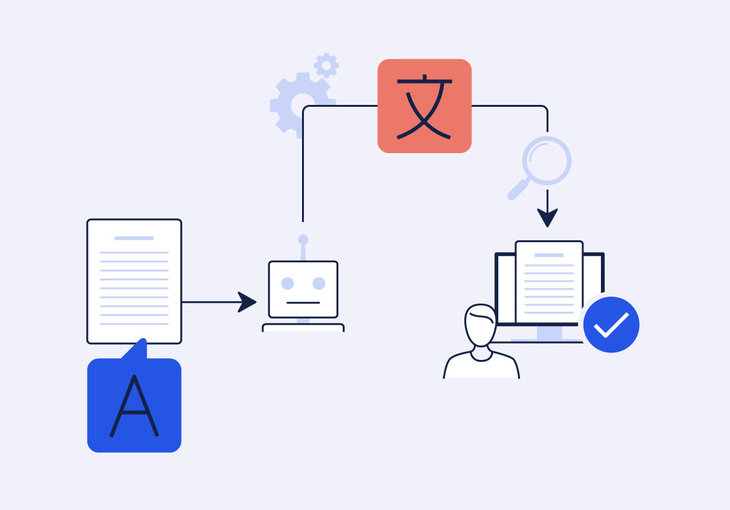
Hybrid translation process (human and machine)

  1. Each of the commercial machines has its strengths. We select the best machine for each language pair and specialist area, using reference values from research and our own measurement data.
  2. Better MT quality is achieved by combining machine translation with a company-specific translation memory and individual terminology databases.
  3. A human post-editor checks and optimizes. He compares the translation with the source text in order to correct incorrect and missing passages.

Complete post-editing for the best possible quality of machine translations

With full post-editing, a qualified post-editor compares the source text with the machine translation. He corrects missing or incorrectly translated parts of the text, spelling, grammar, style and sentence structure. The quality of a machine translation with full post-editing can be comparable to the quality of a human translation.

Toptranslation works exclusively at this level in post-editing.

Which texts are suitable for machine translation and when is a human translation the better choice?

Machine translations with post-editing are suitable for texts where the main aim is to capture the content, but where style and tone are not crucial.

These include, for example:

  • internal e-mail communication
  • Help texts
  • technical texts such as instructions for use and manuals
  • Lists of ingredients
  • Info texts
  • Invoices
  • Contracts and non-disclosure agreements
  • Comment columns in social media.

Machine translations are not suitable for texts with an external impact, where the translator's creativity is required, or for specialist texts where every detail counts.

These include, for example:

  • Advertising slogans and claims
  • Presentations and lectures
  • Newsletter
  • Brochures
  • Press releases
  • Scripts for TV or radio commercials
  • Expert opinion
  • Specialist article.


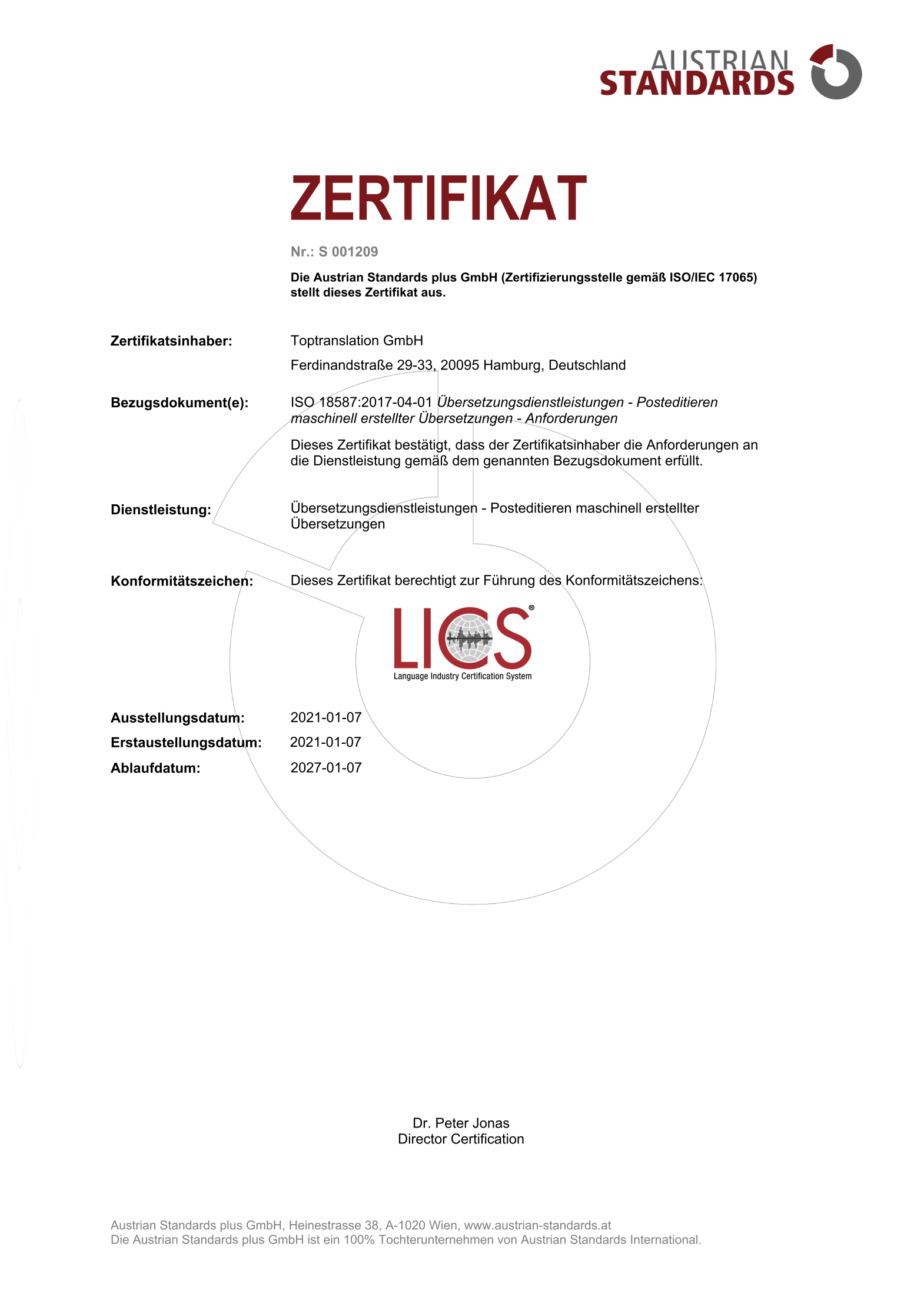
Certified according to ISO 18587

We have been certified in accordance with ISO 18587, the international standard for post-editing, since January 2021. Real post-editing projects from recent years were examined for this purpose. The ISO 18587 standard requires that the selection of post-editors is based on clearly defined standards, that there are defined measures for assessing the post-editors used and that each post-editor has the necessary qualifications:

  • a formally higher translation education (recognized university degree)

    or
  • comparable training in another field with at least two years of documented experience as a translator or post-editor

    or
  • at least five years of documented professional experience as a translator or post-editor

You might also be interested in

Specialized translation

There is more than one

Most important question: For what purpose do you need the translation? We offer services for different requirements in four requirement levels: Basic, Expert, Premium and Post-Editing.

Learn more

Our languages

Professional communication in 53 languages

We help you to speak the language of your customers and ensure that your message gets across - in 53 languages:

Learn more

Quality

Highest quality through active quality management

We make no compromises when it comes to quality. We have developed our own quality assurance system in order to be able to offer you the highest quality for a wide range of requirements.

Learn more