What is a translation memory?
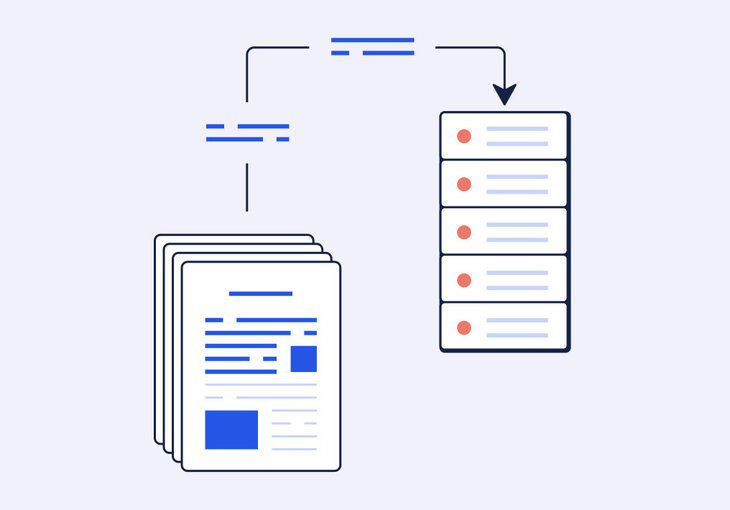
A translation memory is a text database that stores all translated texts and recognizes repetitions in texts. These can be whole sections, sentences or individual segments. A translation memory not only recognizes completely identical repetitions, so-called matches, but also similar but not completely identical sentence segments, so-called fuzzy matches. A translation memory is made up of translation units, i.e. language pairs consisting of source and target language.
How does a translation memory work?
Source texts and translations are saved as segments in the translation memory ("TM" for short). During the translation process, the TM recognizes repetitions from previous translations and automatically suggests the saved translation to the translator. The translator can either accept this with a click or overwrite it with another translation that is more appropriate in the context. These changes are also saved.
What are the advantages of a translation memory?
With the help of a translation memory, texts can be translated more quickly as the same paragraphs or phrases do not have to be translated twice. It also ensures consistency in your company's communication, as a segment that has already been translated does not need to be translated again - and then perhaps differently. The efficiency of a translation memory is particularly noticeable with large volumes of text and a large number of jobs with many repetitions. It makes the translators' work easier and also saves you money, as we naturally discount the matches for you.
It is important to know that a translation memory does not create translations by machine and can support the translator's work, but cannot replace it.
What is the difference between a terminology database and a translation memory?
A terminology database works like a dictionary in which translations of terms and expressions are stored. This must be created and then filled with entries.
A translation memory saves source texts and translations, automatically recognizes repetitions and displays them during the translation process. It does not need to be filled manually. Both can be used independently, but work best in combination.